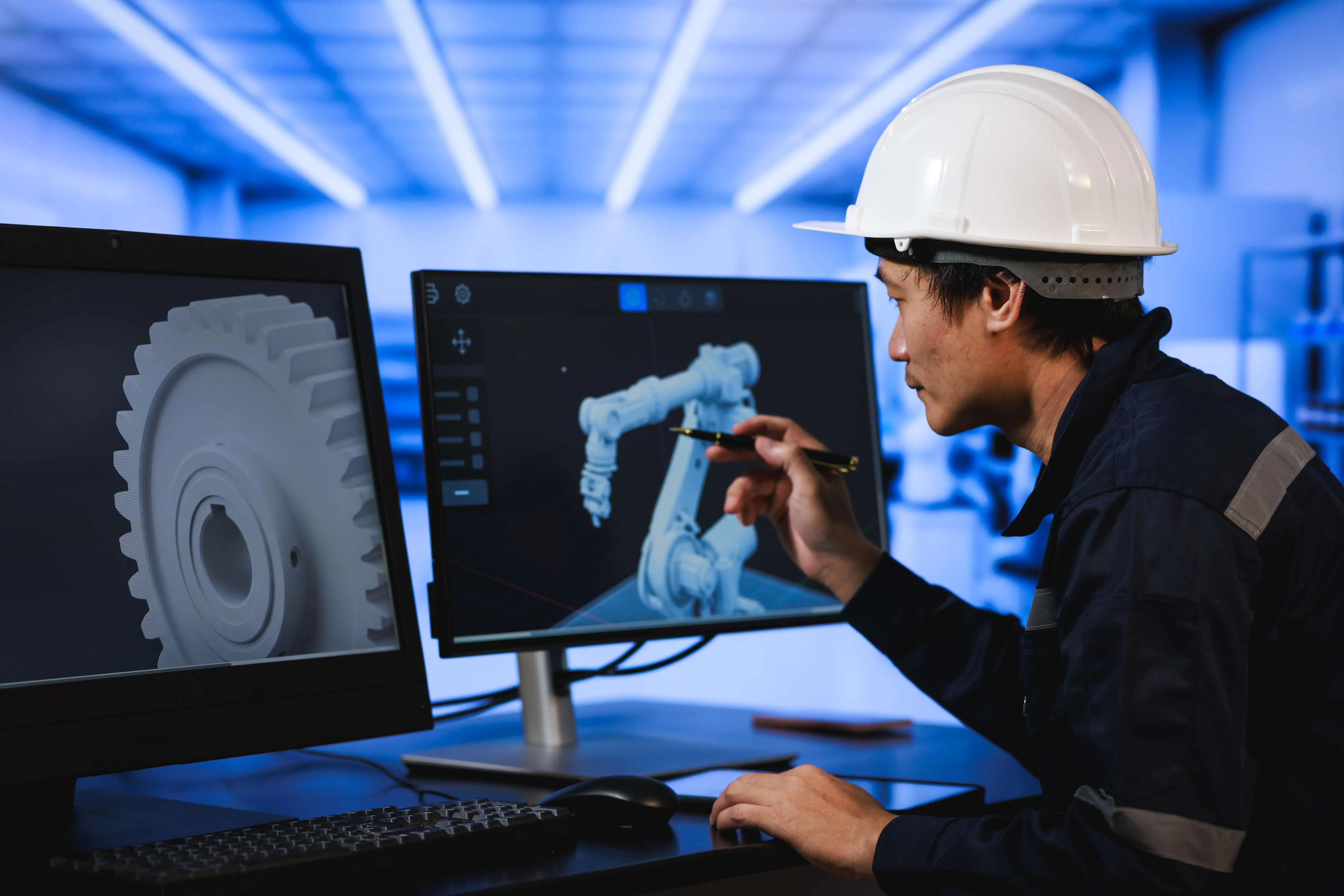
Most quality systems are built to catch mistakes, not stop them. A statistical process control chart flags a problem after the process has already drifted. A lab test confirms a defect after the batch is already made. A customer complaint tells you something went wrong only after the product has shipped. Every one of these is a lagging indicator, and by the time the alert fires, the material is wasted, the machine time is gone, and the damage is already done.
For most manufacturers, this reactive posture is expensive. Industry research puts the cost of poor quality, or COPQ, at 15 to 20% of annual revenue for a typical plant, with world-class facilities keeping that figure closer to 5%. That gap is not a rounding error. It is scrap, rework, warranty claims, and lost customers, quietly compounding every shift.
Preventive quality management flips the model. Instead of waiting to detect a defect, it uses process data and predictive analytics to catch the conditions that lead to one, while there is still time to act. This is the shift from detection to prediction, and it is becoming one of the clearest differentiators between manufacturers who are merely compliant and those who are genuinely competitive.

The Detection Trap: Why Inspection Alone Isn't Enough
Traditional quality control answers one question well: did this unit pass or fail? It answers a much more valuable question poorly: what is about to go wrong, and why?
A subtle shift in temperature, pressure, or tool wear can begin well before any inspection point flags it. Operators do not see it. SPC charts do not catch it, because the process has not yet crossed a control limit. By the time a defect is confirmed, the root cause investigation starts from scratch, often taking days to trace backward through dozens of process variables.
This is not a failure of effort. It is a structural limitation of detection-only systems. They are designed to confirm outcomes, not anticipate them.

What Preventive Quality Actually Looks Like
Preventive quality management does not replace inspection. It adds a predictive layer on top of it. Instead of relying solely on pass or fail checkpoints, manufacturers combine real-time process data, historical quality records, and machine learning models to identify the process conditions most likely to produce a defect, before the production cycle finishes.
In practice, this looks like models trained on temperature, pressure, dwell time, material grade, and tool condition, flagging when a combination of variables is trending toward a known failure pattern. It looks like quality engineers spending their time on the process conditions most likely to cause defects, instead of chasing every anomaly. And it looks like reliability teams focusing on the equipment carrying the highest modelled risk, rather than servicing on a fixed schedule regardless of actual condition.
The result is not just fewer defects. It is a shorter distance between a problem occurring and a person acting on it.
Where Dynamics 365 Fits in a Preventive Quality Strategy
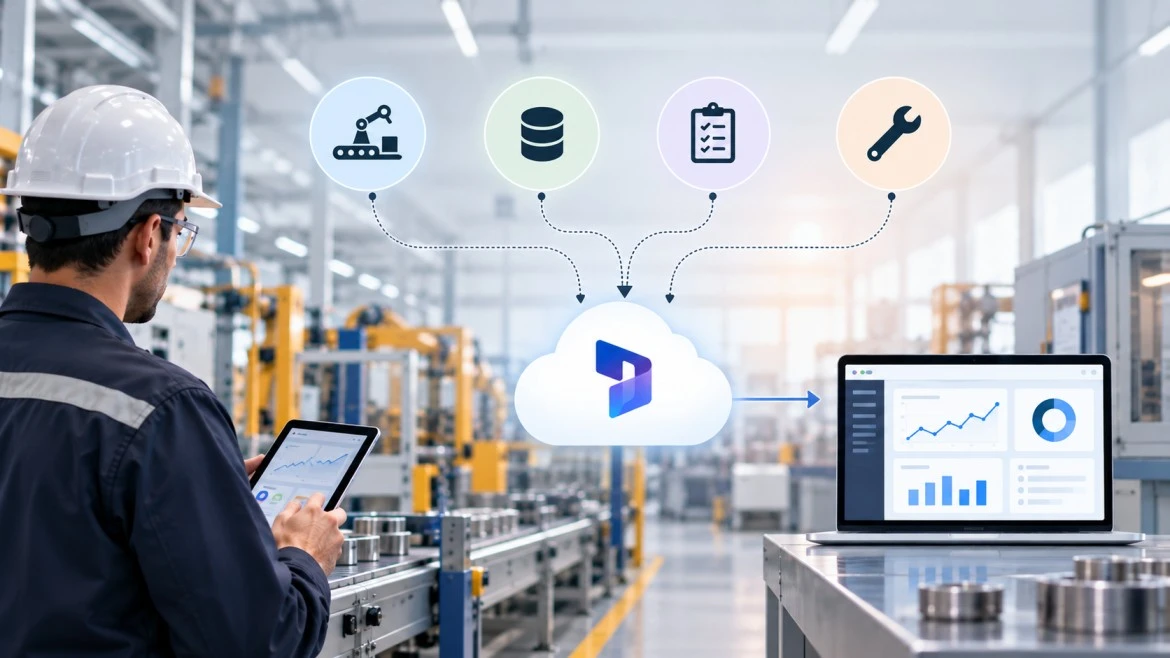
The hardest part of preventive quality is rarely the algorithm. It is the data. Shop floor sensors, ERP transactions, inspection records, and maintenance logs typically live in disconnected systems, which means predictive models are only ever working with a partial picture.
This is where Dynamics 365 becomes the backbone rather than just another tool in the stack. Business Central and Dynamics 365 Supply Chain Management already hold the transactional core of manufacturing operations: work orders, item quality specs, vendor and batch history, non-conformance records. Power BI sits on top of that same data estate, turning scattered quality metrics into a single, real-time view of where risk is building across lines, shifts, and suppliers. Copilot adds a layer of accessibility on top of that, letting quality engineers ask direct questions of production data instead of waiting on a report cycle.
The advantage of building preventive quality on Dynamics 365 is not that it replaces specialist analytics tools. It is that quality data stops living in isolation. A model predicting scrap risk means far more when it is connected to the same system tracking supplier performance, work order history, and inventory cost, because that is where the decision to act actually gets made.
Building the Analytics Layer Without Overengineering It
Manufacturers often assume preventive quality requires a full data science team and a multi-year roadmap. In most cases, it does not. The strongest use cases share three traits: a valuable outcome worth predicting, observable precursors in existing data, and enough lead time between the signal and the defect for someone to actually intervene.
That means the right starting point is usually narrow. Pick one production line or one recurring defect pattern with a known cost. Use the data already captured inside Dynamics 365 and shop floor systems rather than commissioning new sensors first. Validate the model against real outcomes before expanding scope. A predictive layer that works reliably on one line is worth more than an ambitious one that never leaves the pilot stage.

Why This Is a People Problem as Much as a Technology One
Predictive quality tools are decision support, not autopilot. A model can narrow attention to the process conditions most likely to cause a defect, but it is still the operator adjusting the parameter, and the quality engineer interpreting whether the flagged risk is real. Manufacturers that get the most from preventive quality treat frontline teams as interpreters of the data, not just recipients of an alert, and they invest in training and change management with the same seriousness they bring to the technology itself.
Continuous improvement has always depended on closing the loop between what happens on the floor and what the organisation learns from it. Predictive analytics does not remove that loop. It just gives manufacturers a chance to close it before the defect ships, not after.
Shifting from detection to prediction is not a single project with a fixed end date. It is a change in what a quality system is expected to do, catch problems before they happen rather than confirm them after. For manufacturers already running Dynamics 365, the data needed to start that shift is largely sitting there already, waiting to be connected rather than collected from scratch.
If your quality data is still spread across disconnected systems, that is usually the first problem worth solving. Explore how Dynamics Monk helps manufacturers unify quality, production, and supply chain data inside Dynamics 365 to build a genuinely preventive quality strategy.